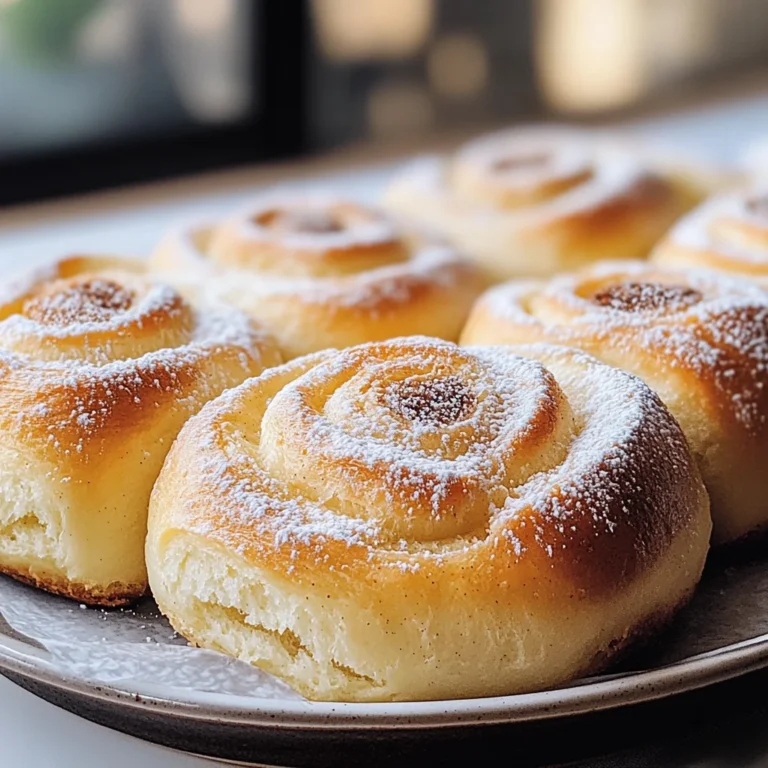
Homemade Croissants Step-by-Step
Making Homemade Croissants Step-by-Step is a rewarding culinary experience that fills your kitchen with the delightful aroma of freshly baked pastries. These flaky, buttery croissants are perfect for breakfast, brunch, or any special occasion. With a little patience and attention to detail, you can create these delicious treats right in your own home.
Why You’ll Love This Recipe
- Flaky Texture: The unique lamination technique creates layers that give croissants their signature flakiness.
- Buttery Flavor: Using high-quality butter enhances the rich taste of each bite.
- Versatile Serving Options: Enjoy them plain, filled with chocolate, or paired with your favorite jams.
- Perfect for Any Occasion: Whether it’s a weekend brunch or a festive gathering, homemade croissants impress everyone.
- Satisfying Baking Experience: Making croissants from scratch is fun and fulfilling, allowing you to hone your baking skills.
Tools and Preparation
Before diving into making your homemade croissants, gather the necessary tools and prepare your workspace. Having everything ready will make the process smoother.
Essential Tools and Equipment
- Rolling pin
- Mixing bowls
- Plastic wrap
- Baking sheet
- Parchment paper
- Pastry brush
Importance of Each Tool
- Rolling pin: Essential for evenly rolling out the dough to achieve the desired thickness for lamination.
- Mixing bowls: Having multiple sizes helps in managing different stages of dough preparation effectively.
- Plastic wrap: Keeps the dough chilled while resting, preventing it from drying out.

Ingredients
To create these flaky delights, you will need the following ingredients:
For the Dough
- 2 1/4 teaspoons instant yeast (or active dry yeast)
- 160 g whole milk (lukewarm)
- 120 g water
- 470 g all-purpose flour (plus extra for dusting)
- 50 g granulated sugar
- 1 1/2 teaspoons salt
For the Butter Layer
- 30 g unsalted butter (room temperature)
- 250 g unsalted butter (room temperature)
For Finishing Touches
- 1 1/2 tbsp all-purpose flour
- 1 large egg
How to Make Homemade Croissants Step-by-Step
Step 1: Prepare the Dough Mixture
In a large bowl add the milk, water, yeast and sugar. If using active dry yeast, let it sit for 5-10 minutes until frothy. Skip this step if using instant yeast.
Step 2: Combine Dry Ingredients
Add the flour and salt to the mixture. Stir until a rough dough forms.
Step 3: Knead the Dough
Turn the dough onto a lightly floured surface and begin kneading. Work the dough for about 3 minutes to start developing gluten. The dough should become smoother and less sticky.
Step 4: Incorporate Butter
Once gluten has begun to develop, add the 30g of room temperature butter to the dough. Continue kneading for another few minutes until fully incorporated.
Step 5: Chill the Dough
Roll it into a rough rectangle shape, wrap it in plastic wrap, and refrigerate for at least 2 hours or overnight.
Now you’re ready to embark on your journey to creating flaky homemade croissants! Stay tuned for more steps on shaping and baking these delicious pastries.
How to Serve Homemade Croissants Step-by-Step
Homemade croissants are a delightful treat that can be enjoyed in various ways. Whether for breakfast, brunch, or a snack, these flaky pastries pair well with a variety of accompaniments.
With Jam or Marmalade
- Use your favorite fruit jam or marmalade to spread over warm croissants for a sweet touch.
With Fresh Fruit
- Serve croissants alongside fresh berries or sliced fruit for a refreshing contrast.
As a Sandwich
- Cut croissants in half and fill them with turkey, cheese, or veggies for a flaky sandwich option.
With Coffee or Tea
- Pair your croissant with a hot beverage to elevate the experience and complement the flavors.
With Cheese
- Enjoy croissants with slices of cheese like brie or cheddar for a savory twist.
How to Perfect Homemade Croissants Step-by-Step
To achieve the best homemade croissants, follow these essential tips that focus on technique and ingredient quality.
- Use cold butter – Using chilled butter during the laminating process helps create those iconic flaky layers.
- Knead properly – Ensure you knead the dough until it’s smooth; this develops gluten for better texture.
- Resting time is crucial – Allowing dough to rest between folds helps relax gluten and makes rolling easier.
- Roll evenly – When rolling out the dough, keep an even thickness to ensure uniform layers throughout.
- Monitor oven temperature – Bake at the right temperature to achieve golden-brown color and crispiness without burning.
Best Side Dishes for Homemade Croissants Step-by-Step
Croissants can be complemented by several side dishes that enhance their flavor and create a balanced meal. Here are some excellent pairings:
- Fruit Salad – A mix of seasonal fruits adds freshness and brightness to your meal.
- Yogurt Parfait – Layer yogurt with granola and fruit for a creamy, crunchy side.
- Scrambled Eggs – Soft scrambled eggs provide protein and richness that pairs beautifully with flaky pastry.
- Green Salad – A light salad with vinaigrette can balance the buttery flavors of croissants.
- Soup – Pair with a bowl of tomato basil soup for a comforting combination.
- Potato Wedges – Crispy potato wedges seasoned simply can add heartiness alongside croissants.
Common Mistakes to Avoid
Making homemade croissants can be tricky. Here are some common mistakes to watch out for.
- Bold yeast choice: Using the wrong type of yeast can affect your dough’s rise. Always opt for instant yeast or ensure active dry yeast is frothy before mixing.
- Bold ingredient temperature: Ingredients that are too cold can hinder the dough’s development. Ensure your milk and butter are at room temperature for the best results.
- Bold dough handling: Over-kneading the dough can lead to tough croissants. Knead just until smooth and elastic to maintain flakiness.
- Bold laminating technique: Skipping proper laminating steps can result in dense pastries. Take your time with folding and rolling to achieve those flaky layers.
- Bold baking time: Not baking long enough may leave your croissants undercooked. Keep an eye on them and bake until golden brown for perfect texture.

Storage & Reheating Instructions
Refrigerator Storage
-
- Duration: Store in the refrigerator for up to 2 days.
-
- Container: Place in an airtight container or wrap tightly in plastic wrap to maintain freshness.
Freezing Homemade Croissants Step-by-Step
-
- Duration: Freeze for up to 3 months.
-
- Container: Use a freezer-safe bag or container, ensuring as much air is removed as possible.
Reheating Homemade Croissants Step-by-Step
- Oven: Preheat your oven to 350°F (175°C). Place croissants on a baking sheet for about 5-7 minutes until warmed through.
- Microwave: Heat on low power for about 10-15 seconds. Be cautious not to overheat, as they may become chewy.
- Stovetop: Use a skillet on low heat for about 2-3 minutes, flipping occasionally, until warm and slightly crispy.
Frequently Asked Questions
Here are some common questions regarding homemade croissants.
What is the key to flaky homemade croissants step-by-step?
The key is proper lamination, where cold butter is folded into the dough multiple times, creating layers that puff up during baking.
Can I use whole wheat flour instead of all-purpose flour?
Yes, but it may affect texture. Use a mix of whole wheat and all-purpose flour for better results without compromising flakiness.
How do I know when my croissants are done baking?
Croissants are done when they are golden brown and sound hollow when tapped on the bottom.
Can I make dough ahead of time?
Absolutely! You can prepare the dough and store it in the refrigerator overnight before shaping and baking.
Final Thoughts
Homemade croissants step-by-step offer a delightful cooking adventure that rewards you with flaky, buttery goodness. Feel free to customize your croissant by adding chocolate or almond paste for extra flavor. Dive into this recipe today, and impress family and friends with your baking skills!
Homemade Croissants Step-by-Step

Indulge in the art of baking with our Homemade Croissants Step-by-Step recipe. This guide will take you through the rewarding process of creating flaky, buttery croissants that fill your kitchen with an irresistible aroma. Perfect for breakfast, brunch, or any special gathering, these pastries are versatile and can be enjoyed plain or filled with your favorite sweet or savory ingredients. With patience and a few essential techniques, you’ll impress family and friends while honing your baking skills. Get ready to experience the joy of freshly baked croissants right from your own oven!
- Prep Time: 30 minutes
- Cook Time: Varies based on final baking steps
- Total Time: 0 hours
- Yield: Approximately 8 servings 1x
- Category: Breakfast
- Method: Baking
- Cuisine: French
Ingredients
- 2 1/4 teaspoons instant yeast (or active dry yeast)
- 160 g whole milk (lukewarm)
- 120 g water
- 470 g all-purpose flour (plus extra for dusting)
- 50 g granulated sugar
- 1 1/2 teaspoons salt
- 30 g unsalted butter (room temperature)
- 250 g unsalted butter (room temperature)
- 1 large egg (for finishing)
Instructions
- In a large bowl, combine lukewarm milk, water, yeast, and sugar. If using active dry yeast, let it sit for 5-10 minutes until frothy.
- Add flour and salt to the mixture, stirring until a rough dough forms.
- Knead the dough on a lightly floured surface for about 3 minutes until smooth.
- Incorporate the 30 g of room-temperature butter into the dough by kneading it further until fully combined.
- Shape the dough into a rectangle, wrap in plastic wrap, and refrigerate for at least 2 hours or overnight.
Nutrition
- Serving Size: 1 croissant (70g)
- Calories: 289
- Sugar: 3g
- Sodium: 232mg
- Fat: 18g
- Saturated Fat: 11g
- Unsaturated Fat: 6g
- Trans Fat: 0g
- Carbohydrates: 27g
- Fiber: 1g
- Protein: 6g
- Cholesterol: 62mg